


- Website Navigation -
 Current Location:
PRODUCTS DISCRIPT
PRODUCTS DISCRIPT
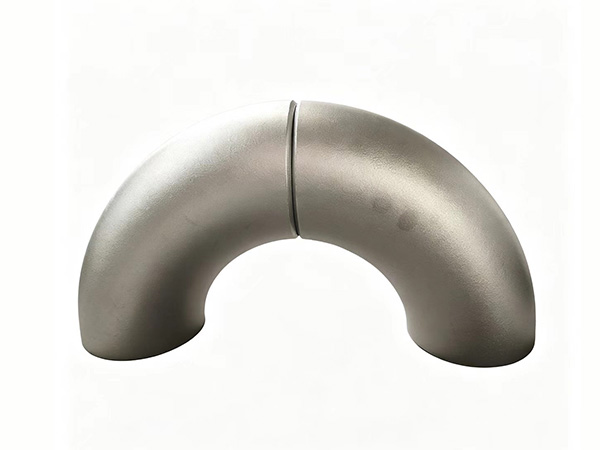
Stainless Steel Elbow
A stainless steel elbow is a high-performance pipe fitting specifically designed to change the direction of fluid (liquid, gas, or slurry) flow in various piping systems. Unlike ord......
 Product Description
A stainless steel elbow is a high-performance pipe fitting specifically designed to change the direction of fluid (liquid, gas, or slurry) flow in various piping systems. Unlike ordinary elbows, it is made of premium stainless steel grades, featuring excellent corrosion resistance, high temperature resistance, and oxidation resistance, making it a preferred choice for demanding industrial, commercial, and sanitary applications where reliability and longevity are critical.
The stainless steel elbow is available in standard angles to suit different pipeline layout needs, with 90°, 45°, and 180° as the most common types. It also comes in long radius (1.5D) and short radius (1D) designs: long radius elbows ensure smoother flow and lower pressure loss, ideal for high-pressure, large-flow systems; short radius elbows are compact and space-saving, suitable for tight installations like equipment-dense industrial areas or ship compartments.
Common stainless steel grades for elbows include 304, 304L, 316, and 316L. 304/304L grades offer excellent corrosion resistance against atmospheric conditions and fresh water, while 316/316L grades provide enhanced resistance to saltwater, acidic/alkaline fluids, and harsh chemicals, making them ideal for marine, chemical, and food industries. These grades also have smooth inner walls, minimizing flow resistance and preventing fluid accumulation.
Connection methods of stainless steel elbows match the connected pipes: Butt Weld (BW) is widely used for large-diameter and high-pressure industrial pipelines; Threaded (NPT/BSP) is suitable for small-bore, low-to-medium pressure systems; Flanged connection enables easy disassembly and maintenance; Socket Weld (SW) is ideal for small-bore, high-pressure, space-constrained installations.
Key applications include food & beverage, chemical & pharmaceutical, oil & gas, water treatment, and HVAC systems. With excellent structural toughness, easy cleaning, and long service life, the stainless steel elbow is an essential component for efficient, safe, and hygienic operation of piping systems requiring direction changes.
 2026-05-09
Hebei Penghui Pipe Fittings Co., Ltd
TEL:8613230445771
TEL:
8618231747222
E-mail:
info@phbend.com
ADD:Xiwang Avenue, Xiwang New Area, Mengcun Hui Autonomous County, Cangzhou City, Hebei Province, China
Copyright © 2026-2027 http://www.phbend.com. All Rights Reserved Hebei Penghui Pipe Fittings Co., Ltd All rights reserved